After BEAD, What's Next for Rural Service Providers?
Your funded network is the starting point. Here's how to figure out where to grow next.
BEAD can help fund your next network build. But it won't tell you where your business should grow after that.
And that's a question worth asking now.
As rural service providers move forward with funded projects, they're also looking at what's just beyond those boundaries. Nearby communities, potential business customers, and opportunities to extend the networks they're already investing in.
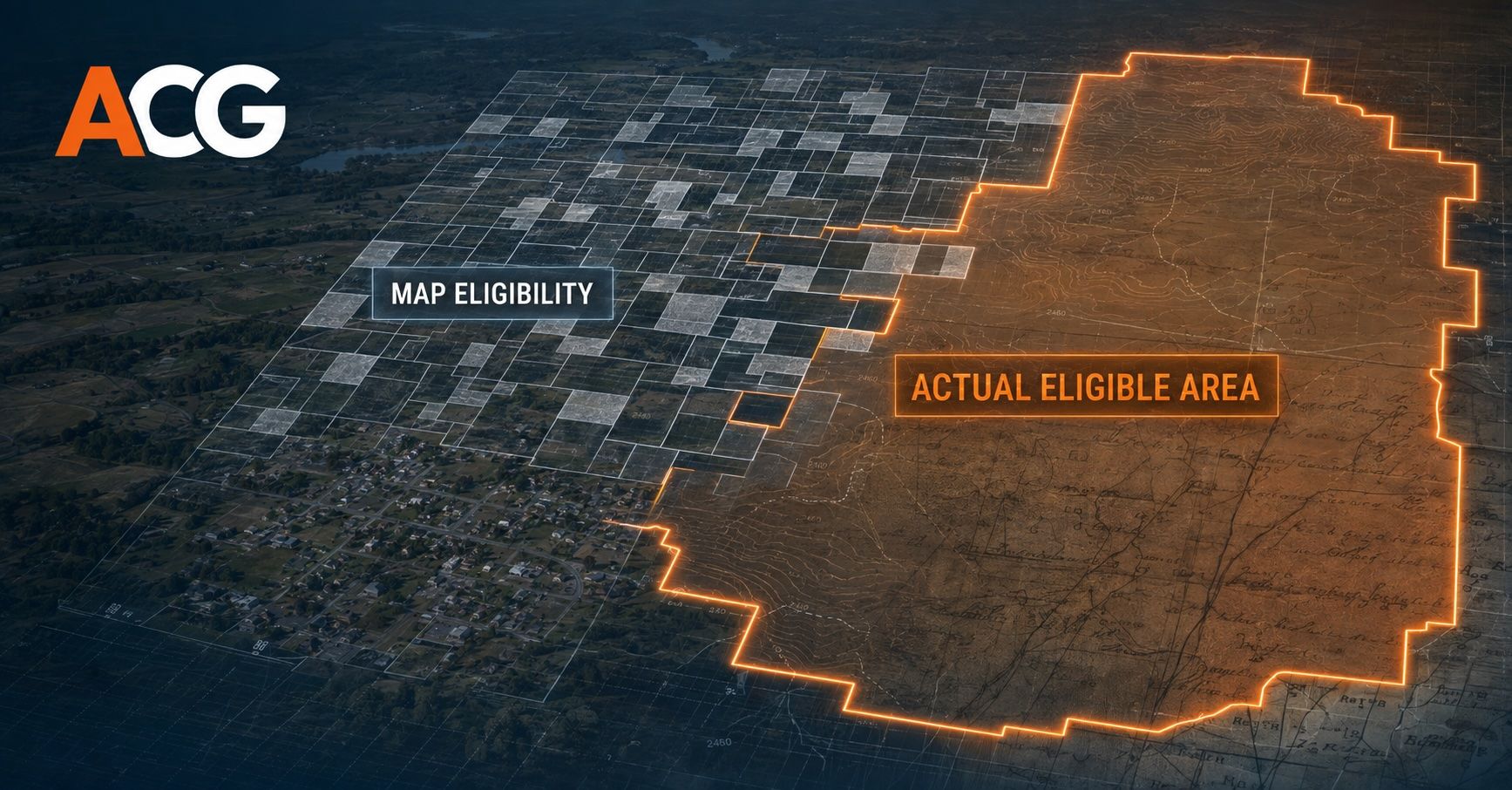
Some of those opportunities could make good business sense. Others may look promising on a map but become expensive once you factor in construction, permitting, and actual customer demand.
The challenge isn't just finding places that need broadband. It's figuring out which ones make sense to serve.
You don't have to wait until your BEAD build is complete to start answering that question. In fact, some of the decisions you're making today could shape your options for years to come.
Start with the Network You're Building
Your BEAD network may create opportunities to reach customers beyond the funded project. But being close to your fiber route doesn't automatically make a community a good expansion opportunity.
A neighborhood a mile from your planned network might require an expensive railroad crossing, new pole agreements, or additional permitting. Meanwhile, a business cluster several miles away could be easier to reach if there's an existing route or a customer willing to make a meaningful commitment.
That's why it's worth looking beyond the map.
Before identifying your next market, consider:
- Where could your planned network support an extension without major new backbone construction?
- Do you have the capacity and connection points to serve additional customers?
- What permitting, pole attachment, or right-of-way challenges could affect the route?
- What would it actually cost to connect the first paying customer?
There's also an important difference between infrastructure you already control and infrastructure that's still being designed or approved.
If your expansion plans depend on a future route, connection point, or permit, make sure those assumptions are clearly understood before you build a business case around them.
A good expansion plan starts with what your network can realistically support, not just what's nearby.
Don't Confuse a Coverage Gap with Customer Demand
Finding an underserved community is one thing. Finding enough customers to support an investment is another.
It's easy to look at a coverage map and see opportunity. But a lack of broadband availability doesn't tell you how many people will subscribe, what they're willing to pay, or how quickly you can expect revenue.
Before investing in a new market, you need to understand who's likely to buy and why.
Are there households actively looking for better service? Businesses with connectivity needs their current providers aren't meeting? Schools, healthcare facilities, or other organizations that could become anchor customers?
And just as importantly, what are those customers using today?
Market research doesn't have to be complicated, but it does need to go beyond assumptions.
Talk to potential customers. Meet with local organizations. Understand the competitive landscape. Look for businesses or institutions willing to discuss their needs and potential commitments.
Surveys can help, but interest isn't the same as a signed customer.
The goal isn't to guarantee every subscription before you build. It's to develop a realistic picture of demand before committing significant capital.
Sometimes that research reveals a stronger opportunity than the one you originally identified. Other times, it tells you a market isn't ready.
Both outcomes are valuable.
Knowing where not to build can be just as important as knowing where to expand.
Does the Expansion Actually Make Financial Sense?
A market can look attractive until you start adding up the real costs.
Construction is only part of the equation. There's also permitting, pole work, customer connections, network electronics, sales and marketing, and the ongoing expense of supporting new customers.
And those costs can vary dramatically from one community to another.
That's why a sound expansion decision needs more than an estimate of cost per passing.
You also need to understand:
- Customer demand: How many customers can you realistically expect to sign up?
- Revenue potential: What will those customers pay, and how quickly will revenue grow?
- Total investment: What will it cost to build, connect, and support the market?
- Time to revenue: How long before the network begins generating income?
- Financial risk: What happens if construction costs increase or customer adoption takes longer than expected?
A spreadsheet can make almost any project look good if the assumptions are optimistic enough.
The real test is whether the opportunity still makes sense when you account for delays, unexpected costs, and slower customer adoption.
Consider two possible expansions.
One reaches a larger number of homes but requires significant construction and has uncertain demand. The other serves a smaller market with an established business customer and a more straightforward route.
The larger market may offer greater long-term potential. But the smaller one could produce revenue sooner with less capital at risk.
Neither is automatically the right choice.
The right investment is the one supported by realistic costs, credible demand, and a financial return that fits your business.
Can You Build It Without Disrupting Your BEAD Project?
Even when an expansion makes financial sense, timing can create problems.
BEAD-funded projects are putting pressure on the same resources rural providers depend on: fiber materials, engineering teams, construction crews, and experienced splicing technicians.
As we've discussed in our article, What BEAD Demand Is Doing to Fiber Project Timelines, those constraints need to be addressed earlier than many project schedules assume.
Splicing is a particularly important example.
You might have construction crews available and materials on-site, but if certified splicers are booked months out, your completed network could sit waiting to be activated.
That delay affects more than the construction schedule. It pushes back customer connections and revenue.
Now imagine adding an expansion project that depends on those same resources.
Before committing to a new build, ask:
- Will the expansion compete with our funded project for crews or materials?
- Can procurement and engineering move forward together?
- When will we need permitting approvals and splicing capacity?
- Could an expansion delay our existing commitments?
- Are our projected service dates realistic given current resource availability?
An adjacent market may look simple to reach on paper. That doesn't mean it will be simple to build.
The goal is to identify opportunities early enough to plan for them without putting your current project at risk.
Growth should strengthen your network and your business, not create unnecessary pressure on the work you've already committed to deliver.
Plan What's Next While You Still Have Options
One of the biggest advantages rural providers have right now is that many are still making decisions about routes, materials, and construction schedules.
Those decisions can affect future expansion opportunities.
A connection point included in today's design might make tomorrow's extension more practical. An early conversation with a potential anchor customer could change which route makes the most sense. Identifying a difficult crossing now could save you from pursuing an expensive expansion later.
That doesn't mean you need to commit to another construction project today.
It means doing enough homework to understand your options before those options become harder or more expensive to pursue.
Start by identifying a few promising markets. Look at what your network could support. Talk to potential customers. Test the economics. Understand the engineering and permitting challenges.
Then decide which opportunities deserve further investment and which ones need more work.
You may find that your next opportunity is closer than you think. Or you may discover that waiting, adjusting the route, or pursuing a different market is the smarter move.
Either way, you'll be making the decision with better information.
How ACG Helps Rural Providers Plan for Growth
At Ackerman Consulting Group, we know that deciding where to build takes more than identifying an underserved area on a map.
It takes an understanding of the market, the customers, the economics, and the engineering required to make the project work.
That's why we bring market research, feasibility and financial analysis, route planning, and engineering together to help rural providers evaluate expansion opportunities.
We help providers work through the questions that matter before they commit capital:
Where is the opportunity? Is the demand real? What will it cost to serve? Can the network support it? And does the investment make sense for the business?
The objective isn't to make every potential market look attractive. It's to help providers identify the opportunities worth pursuing and understand the risks before moving forward.
What's Your Next Growth Opportunity?
Your BEAD project is a major investment in your network and the communities you serve.
But it doesn't have to be the end of your growth strategy.
The work you're doing today can help shape where your business goes next. And the earlier you start exploring those opportunities, the more flexibility you'll have to make informed decisions.
Considering a new market or an extension beyond your funded footprint?
Let's talk about what you're seeing, what your network could support, and which questions are worth answering before you invest.
Contact Ackerman Consulting Group to start the conversation.